
Life-threatening emergency
SES Flood & Storm Assistance
Bushfire Information
Accommodation Jindabyne Emergency Contact
02 6456 2216 (press 1 after hours)
What to do in case of Emergency
If an emergency occurs at the property, follow these steps:
Step 1 — Evacuate safely. Leave the property immediately and move to a safe location. Take only the essentials — phone, medications, wallet, and keys. If you are staying during winter, ensure everyone has warm clothing and appropriate layers before leaving, as temperatures can drop significantly, especially at night.
Step 2 — Contact the relevant authorities. Call Triple Zero (000) for police, fire, or ambulance in a life-threatening situation. For floods and storms, contact NSW SES on 132 500. For bushfire information, call the NSW RFS on 1800 679 737.
Step 3 — Notify the host. Once you and your guests are safe, please contact us on 02 6456 2216. If calling outside business hours, press 1 to be connected to our after-hours contact.
Where to get information in case of Emergency
Local radio — In an emergency, tune to ABC Local Radio for Cooma/Snowy Mountains on 1602 AM. This is the official emergency broadcast station for the Snowy Monaro region. ABC Radio National is also available on 95.3 FM in the Cooma/Bega/Snowy area.
Social media & online updates — Follow @MonaroRFS on Facebook for local bushfire updates specific to the Jindabyne area. Follow @NSWRFS and @NSWSES on X/Facebook for statewide alerts.
The Snowy Monaro Regional Council Disaster Dashboard – shows live local incidents including fire, flood, and road conditions.
Hazards Near Me NSW — real-time fires, floods, and hazards on a live map, with push notifications for your area.
Emergency+ — shares your GPS location when calling 000 in remote areas.
Live Traffic NSW — alerts on road closures including alpine routes. All are free on iOS and Android.



Evacuation Locations
In the event of an evacuation, please follow the steps below.
On-site evacuation. Each property has its own evacuation diagram — please locate and follow it to exit the building safely. Your immediate assembly point is on the street directly in front of the property, provided it is safe to do so. If the street is not safe, continue moving further away from the hazard until you reach open ground.
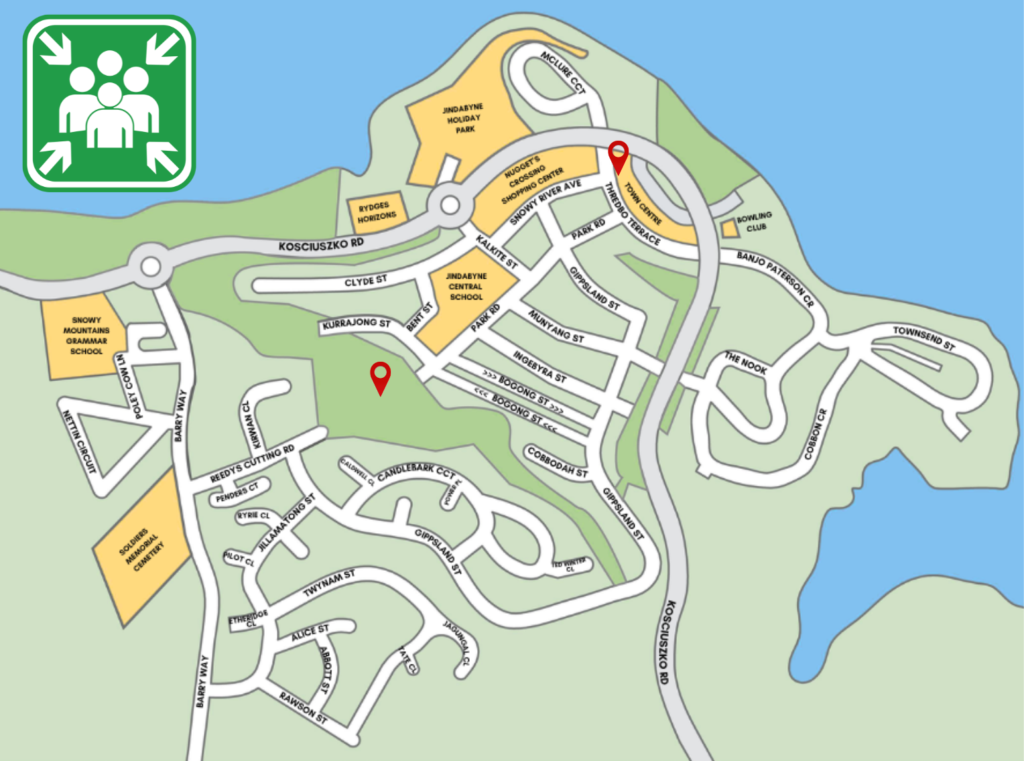
Local evacuation centres. If a broader evacuation of the area is required, the following Jindabyne locations may be activated as emergency centres:
- JJ Connors Oval
- Jindabyne Memorial Hall
Regional evacuation — Cooma. If conditions in Jindabyne require a full evacuation, Cooma is the recommended destination approximately 60 kilometers (45 minutes) north. Cooma has greater emergency service capacity and facilities to support displaced guests.
Medical emergencies — If anyone in your group requires urgent medical attention, proceed directly to Cooma Hospital (135 Bombala Street, Cooma) or, for serious cases, continue to Canberra Hospital, which has a higher level of specialist care. Do not wait — call 000 if the situation is life-threatening.
Notify the host — Once you are safely evacuated, please contact us on 02 6456 2216 (press 1 for after-hours) so we can account for all guests and keep track of movements.
Total Fire Ban – What it means
Jindabyne falls within the Monaro Alpine fire district, managed by the Monaro Rural Fire Service. A Total Fire Ban (TFB) is declared when weather conditions create an extreme risk of fire. On these days, lighting any fire in the open is strictly prohibited — including campfires, braziers, and fire pits. Check the current fire danger rating daily at NSW Rural Fire Service page or via the Hazards Near Me app.
During a total fire ban:
- Open fires of any kind outdoors, including campfires, fire pits, and braziers. This applies even to enclosed firepits on the property.
- Gas and electric BBQs are permitted on total fire ban days (unless the fire danger rating is Catastrophic, in which case all outdoor cooking must stop).
- Cooking and heating inside the dwelling using gas or electricity as normal.
Hazards in our area
The Snowy Monaro region is bushfire-prone, with approximately 60% bushland and 37% grassland surrounding Jindabyne. The 2019–20 Black Summer fires burned more than 230,000 hectares in this region. Fire risk is highest in summer, when dry lightning storms and strong afternoon wind changes are common — conditions that can make fires spread rapidly and erratically. The surrounding Kosciuszko National Park adds significant fuel load to the landscape.
The alpine environment can generate sudden, intense thunderstorms year-round. These may include hail, high winds, and lightning. Lightning strike risk is elevated in open alpine terrain. Stay indoors and well away from exposed ridgelines and peaks during storm activity.
Jindabyne sits on the shores of Lake Jindabyne and is fed by the Snowy River system. Heavy rainfall events can cause localised flooding and rapid rises in waterways. Some roads in and around Jindabyne, including lower-lying rural routes, may become impassable. Never attempt to drive through floodwater.
As one of the highest-altitude towns in Australia, Jindabyne experiences snowfall and sub-zero temperatures, particularly between June and September. Black ice on roads — including the Alpine Way, Kosciuszko Road and routes toward Thredbo and Perisher — can form quickly and without warning. Hypothermia is a genuine risk for visitors unprepared for alpine conditions.
The Snowy Mountains region around Jindabyne is home to several native species that guests should be aware of. Eastern brown and tiger snakes are present and active in the warmer months — if you encounter one, move away calmly and give it space. Redback and funnel-web spiders may be found under rocks, in wood piles, and in outdoor furniture, so shake out footwear left outside and wear gloves when handling firewood. Wombats, kangaroos, and wallabies are common on local roads and are a serious hazard at dawn, dusk, and after dark — reduce your speed accordingly. Guests heading into Kosciuszko National Park should wear long sleeves, use insect repellent, and check for paralysis ticks after returning.
Local Information and Contact Details
- Police: 02 6450 1900
- Fire: 02 6453 4738
- Snowy Mountains Medical Centre: 02 6456 2545
- Jindabyne Medical Practice: 02 6457 1221
- NSW RFS Bushfire Info Line: 1800 679 737
- NSW SES: 132 500
- Snowy Vets: 02 6455 7888
- Snowy Mountains Wildlife Rescue LAOKO: 02 6456 1313 (Volunteer)
- Snowy Monaro Regional Council: 1300 345 345
- Jindabyne Real Estate Office: 02 6456 2216 (if after hours press 1 to get to our contact)
General Emergency Contact
- Emergency 000 – call 000 for police, fire or ambulance for life-threatening emergencies
- Emergency text – call 106 if you are deaf or have a speech or hearing impairment
- NSW Rural Fire Service – call 1800 679 737 for information on fire bans and bushfires
- NSW State Emergency Service – call 132 500 for support and advice in an emergency